

Canadian Cloud at Risk Over EU Associate Membership
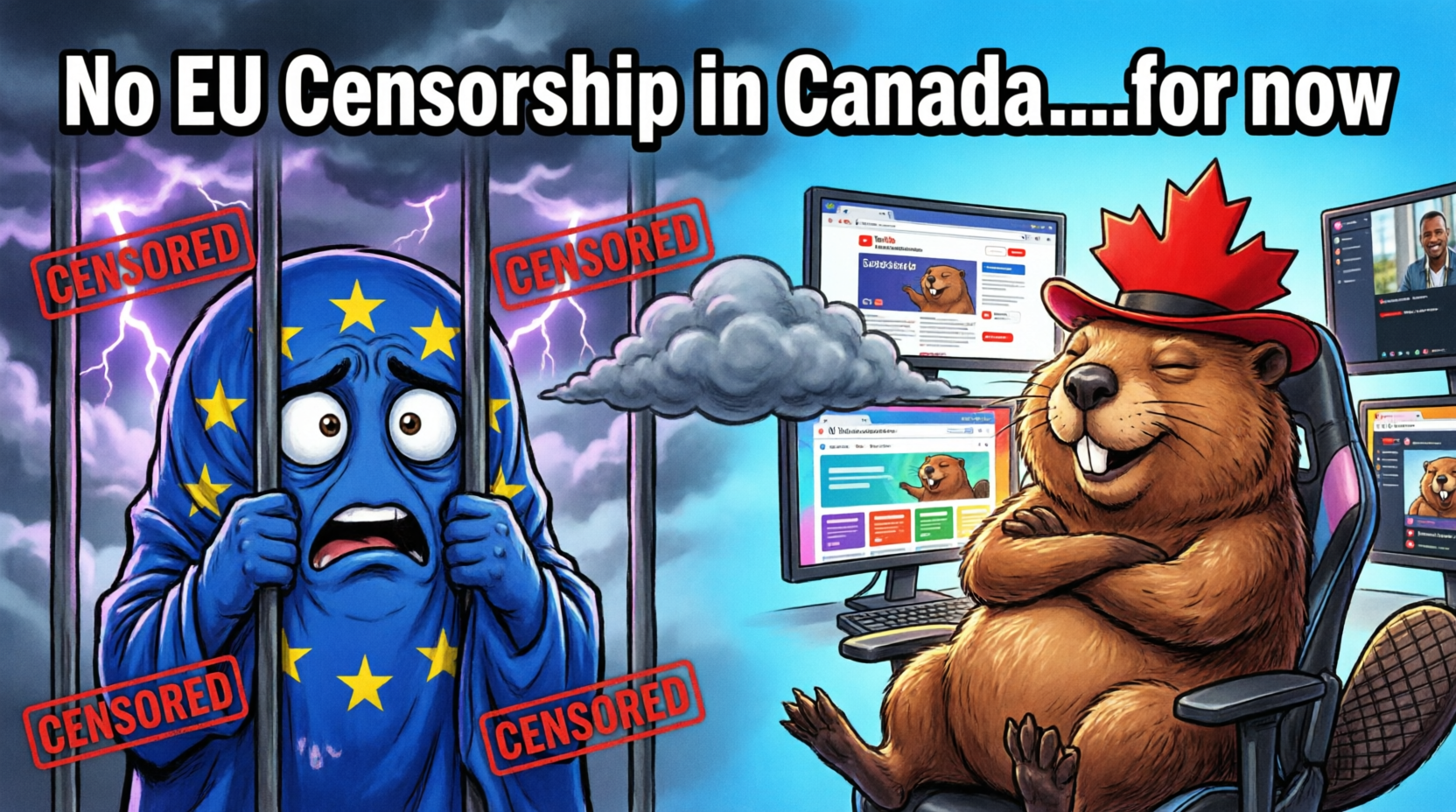
It’s common knowledge that I am not a fan of EU business regulations. This especially applies to Data Sovereignty and Cybersecurity, when it comes to things like the far reach of the GDPR and censorship. This was not a one-off for the EU, since they have kept going by removing foreign competitors via their intrusive and overreaching MiCA crypto regulations that have even caused Binance to pack up and leave:
Binance Faces EU Exit: World’s Largest Crypto Exchange Misses MiCA License — https://bitcoinfoundation.org/news/regulation/binance-faces-eu-exit-worlds-largest-crypto-exchange-misses-mica-license/
I am all for Canada and any nation to diversify its trade and to grow its economy. When it has come to India or China, and non-NATO members, Canada has treaded very carefully often designating almost any deal from China as possible national security risk, whether a mining deal or a few Chinese EVs (after all only a Chinese EV could be a security risk and not a US EV), all while allowing US companies to acquire Lifelabs to even deliver basic healthcare services. — https://globalnews.ca/news/11135519/lifelabs-us-trump-tariffs/
This is what has me concerned because Canada has often adopted laws to suit the needs of allies, even at the expense of Canada itself such as removing the requirement for US content providers to pay tax to Canada. — https://ici.radio-canada.ca/rci/en/news/2272318/ottawa-plans-to-end-netflix-tax-replace-with-public-canadian-content-funding-document
We did that because we were afraid of the US or perhaps our leadership thought “we would get a better deal from the US” but instead we got nothing. What I’m suggesting is that our government throughout a period of decades has a “confused” history of having trouble “making deals” that benefit the people and not giving nearly 700B in free money to corporations. — https://www.marxist.ca/article/auditor-general-hides-786-billion-covid-bailout-to-corporations
I am concerned that our policies will become more European and we don’t need any additional encouragement such as the EU Pfizergate scandal. — https://en.wikipedia.org/wiki/Pfizergate. The EU has recently shown us that they cannot make self-serving policies, even for energy, and they cannot or will not even defend Greenland. And Europe as a whole has been an increasing source of far-right extremism from both voters and governments.
Canada on the other hand has recently demonstrated that it is willing to pivot, and even work with China on its own terms including EVs, and even at the ire of the US government. Canada has typically adopted policies to make trade easier with its neighbours and strongest allies, or as Time magazine refers to it, as a gravitational pull when it comes to the US. Another simple example of this was when I flew into Osaka and not Tokyo. The Osaka KIX airport, has Mandarin writing and feels much more Chinese, owing to its strong ties with Hong Kong. In Osaka’s case, this didn’t mean the changing of Japanese policies, but Canada has struggled with this issue when growing closer ties.
I will be closely watching to see that Canada maintains full independence and is not tempted to bring in any version of disastrous EU policies like the GDPR, MiCA and additional internet censorship laws like the EU has, for the sake of trade.
In order for businesses to continue feeling safe to hosting their data and servers in Canada than the EU, we need to make sure that we do not adopt any of the EU’s restrictive and non-democratic censorship laws. We will also have to closely watch that Canada does not get too comfortable in honouring EU requests. For example, I have given links and quotes to RT news, which is legal in the rest of the world but not the EU. Canada must resist illegal requests from the EU on the basis of EU law alone and make sure we don’t gain a reputation for data breaches like the EU where French officials sell crypto tax payer information to criminals.
Canada is still a great alternative to the EU for hosting, but I’ll be watching closely to make sure Canada’s laws do not change at the request of the EU, which would erode this assessment. And to be fair, we still don’t know what the newly invented “Associate Membership” looks like and many EU members oppose this designation.